Finding a roofer is easy, but finding one you can trust with your home can be much harder. The wrong choice can lead to poor workmanship, unexpected costs, delays, and roofing problems that return after the work is complete.
A cheap quote can look attractive at first. However, price alone does not tell you about the quality of materials, experience, insurance, guarantees, or the work included. Missing these details can turn a simple roofing project into an expensive problem.
Knowing how to choose a roofer can help you avoid these risks. By checking the right details before hiring, you can compare roofing contractors with confidence and choose someone who is suitable for your property and the work required.
What Should You Look for When Choosing a Roofer?
When choosing a roofer, look for relevant experience, suitable insurance, positive reviews, clear quotations, quality materials, and reliable guarantees. A good roofer should also explain the work clearly and answer your questions before the project begins.
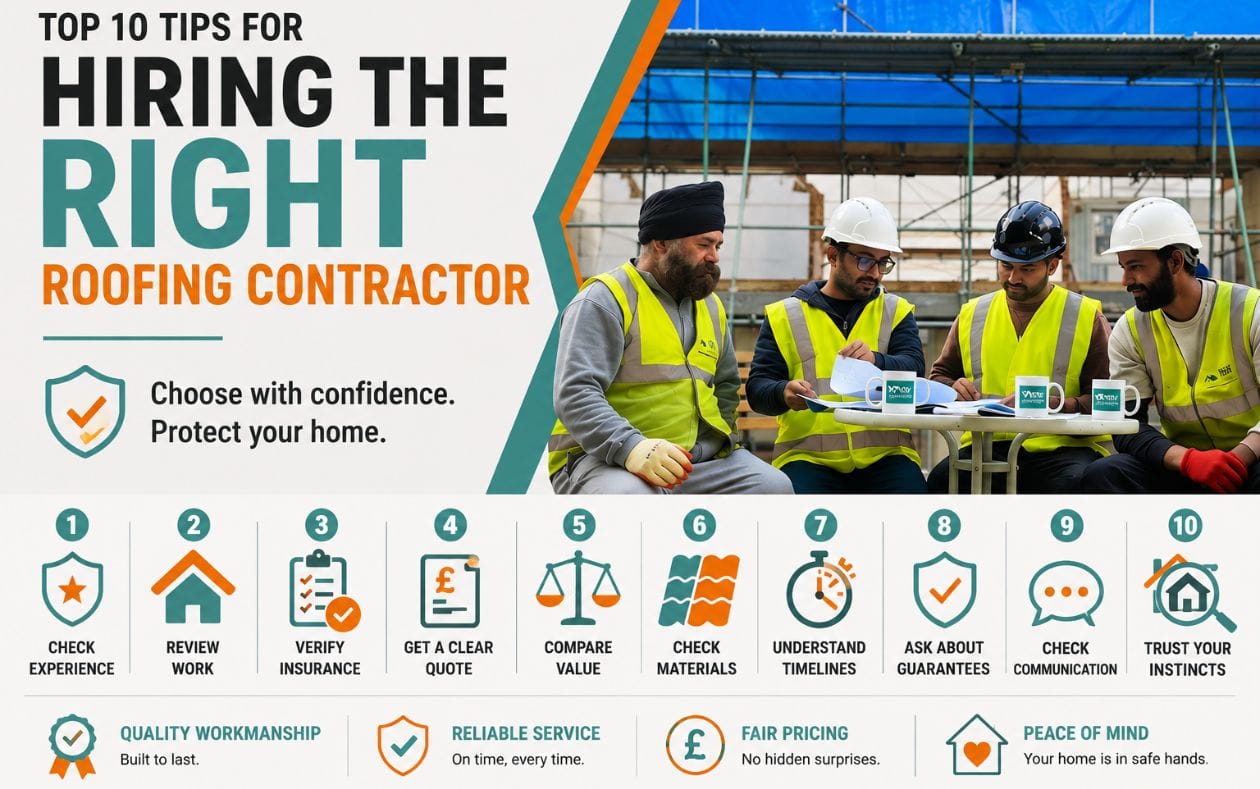
1. Check Their Roofing Experience
Choose a roofer with experience in the type of work your property needs. Roof repairs, replacements, flat roofs, and pitched roofs can require different skills and materials. Ask about similar projects they have completed. Relevant experience can help the roofer identify potential problems and recommend a suitable solution for your roof.
Do not judge experience by years in business alone. Look at the quality and relevance of previous roofing work before making your decision.
2. Review Previous Work
Look at previous projects before choosing a roofing contractor. Completed work can give you a better idea of their workmanship, experience, and approach to residential construction. Ask to see recent examples that are relevant to the work you need. Pay attention to the quality of the finish and how similar projects have been completed. Customer reviews can also help you assess reliability, communication, and overall service.
At YDV Construction, we believe homeowners should be able to see the quality of our work before making a decision. You can explore our completed projects to see examples of the residential construction work we have delivered.
3. Check Insurance and Credentials
Ask the roofer about their insurance and any relevant trade memberships or accreditations. Suitable insurance can provide important protection if an accident or property damage occurs during the roofing work. Do not rely on claims alone. Ask for current details where appropriate and check that the cover relates to the work being carried out.
Credentials can also provide an extra trust signal, but they should not replace your other checks. Consider them alongside experience, previous work, reviews, and the quality of the proposed roofing solution.
4. Get a Detailed Roofing Quote
Ask for a written roofing quote that clearly explains the proposed work and costs. A detailed quote helps you understand what you are paying for before you make a decision. The quote should cover the scope of work, labour, materials, waste removal, and scaffolding where required. It should also include expected timescales, payment terms, VAT where applicable, and any exclusions. Avoid choosing a contractor based on a vague total price.
If you are considering roofing work with YDV Construction, you can request an estimate based on your project requirements. This helps our team understand the work needed and provide suitable guidance on the next steps.
5. Compare More Than Price
Do not choose a roofer based on the lowest quote alone. A lower price may cover different materials, less work, or fewer protections than a more detailed quotation. Compare each contractor’s proposed work, materials, timescale, guarantees, and exclusions. Make sure you are comparing similar scopes before deciding which quote offers better value.
For example, one quote may include scaffolding and waste removal. Another may leave these costs out. Checking the details can reveal why two roofing quotes have very different prices.
6. Check the Roofing Materials
Ask which materials the roofer plans to use and why they are suitable for your property. The right choice will depend on the roof type, existing structure, required repair, and expected performance.
Request clear information about the proposed products rather than accepting vague descriptions such as “standard roofing materials.” Where relevant, ask about the manufacturer, specification, and expected lifespan. Quality materials still need correct installation. Consider the proposed materials alongside the contractor’s experience and approach to the work.
7. Ask About Guarantees
Ask what guarantees or warranties apply before agreeing to the roofing work. A workmanship guarantee normally relates to the installation, whereas a manufacturer warranty may cover specific roofing products.
Check what is covered, how long the protection lasts, and whether any conditions or exclusions apply. Ask whether you will receive the relevant documents after the project is completed. Do not assume every guarantee provides the same protection. Read the terms so you understand exactly what is included.
8. Assess Their Communication
Good communication matters before and during a roofing project. A reliable roofer should answer reasonable questions and explain the proposed work in terms you can understand.
Pay attention to how clearly they discuss costs, materials, timescales, and potential problems. Important changes should also be explained before additional work goes ahead. Clear communication can prevent misunderstandings and make it easier to deal with unexpected issues during the project.
9. Confirm the Project Timeline
Ask when the roofing work can start and how long the contractor expects it to take. The timeline should reflect the size and complexity of the project.
Weather, material availability, scaffolding, and hidden roof damage can affect completion dates. Your roofer should explain any factors that could cause delays rather than promising an unrealistic deadline. Agree on the expected stages before work begins. This gives you a clearer idea of how the project should progress.
10. Watch for Red Flags
Be cautious if a roofer pressures you to make an immediate decision or provides little information about the proposed work. An unusually low quote without a clear explanation should also raise questions.
Other warning signs include vague payment terms, no written scope, unclear business details, and reluctance to discuss insurance or guarantees. Take time to complete your checks before hiring. If important information is missing or the contractor avoids reasonable questions, consider getting another roofing quote.
When Should You Call a Roofer?
You should call a roofer when you notice signs of roof damage, leaks, missing materials, or changes that could allow water into your property. Getting the roof checked early can help prevent a small issue from developing into more extensive damage.
Common signs that you may need a roofer include:
- Water stains or damp patches on ceilings
- Missing, cracked, or slipped roof tiles
- Visible damage after strong winds or storms
- Leaking around chimneys, rooflights, or flashing
- Sagging or visibly uneven areas of the roof
- Damaged gutters or excessive roofing debris
- Persistent moisture or signs of water entering the loft
Some roofing problems are difficult to assess from ground level. The visible damage may also be only one part of the issue. An experienced roofer can inspect the affected areas, identify possible causes, and explain whether maintenance, repair, or more extensive work may be required.
Avoid climbing onto the roof yourself, especially after a storm or when the surface is wet or damaged. If you notice signs of a roofing problem, YDV Construction can assess the work required and recommend a suitable solution. Learn more about our roofing services to see how we can help protect and maintain your roof.
What Questions Should You Ask a Roofer Before Hiring?
Before hiring a roofer, ask questions that help you verify their experience, proposed work, costs and responsibilities. Get important details in writing where appropriate. Key questions to ask include:
- Have you completed similar roofing work before?
- What does the quote include?
- Which roofing materials will you use?
- Do you have appropriate insurance?
- What guarantees are provided?
- How long will the work take?
- How will additional work be handled?
- What are the payment terms?
A professional roofing contractor should be comfortable providing evidence where appropriate. Check reviews, previous work, insurance details, and relevant credentials before making your decision. These checks give you a clearer picture of the contractor’s experience and reliability before work starts.
How Many Roofing Quotes Should You Get?
Getting at least three roofing quotes is a useful starting point for most projects. It gives you a better view of the available options and helps you identify prices that appear unusually high or low.
Use the quotes to understand how different roofers approach your project. One contractor may recommend a repair, whereas another may identify work that requires a more extensive solution. If the recommendations differ significantly, ask why before making a decision.
Do not feel pressured to accept the first offer you receive. Taking time to consider several options can help you make a more informed choice and find a roofer who suits your property, priorities, and budget.
Should You Choose a Local Roofer?
Choosing a local roofer can make it easier to arrange site visits, discuss the work in person, and get support if you need follow-up work. Local contractors may also have experience with common property and roof types in your area.
A nearby roofer can often assess roofing problems without requiring long-distance travel. This can be particularly useful when your roof needs an inspection before the contractor can recommend the right solution.
However, location should not be the deciding factor. Choose a roofer based on their suitability for your project, quality of work, and ability to meet your requirements. Working with a local construction company in East London can also make site visits, communication, and ongoing project coordination easier.
Conclusion
Choosing the right roofer is about more than finding the lowest price. Take time to understand what each contractor offers and make sure you feel confident about the proposed work before making your decision.
The right roofing contractor should give you clear information and make it easy to understand what your project involves. Careful checks before hiring can reduce the risk of unexpected problems and help you achieve a better result for your home.
If you need professional roofing work, YDV Construction can assess your requirements and recommend a suitable approach for your property. Explore our roofing services and contact us to discuss your project.
Frequently Asked Questions
You may need an emergency roofer when roof damage creates an immediate risk to your property or safety. This can include severe leaks, storm damage, fallen materials, major tile loss, or damage that leaves the roof exposed. Avoid accessing the damaged roof yourself and arrange a professional assessment as soon as possible.
Find a reputable roofer by checking relevant experience, recent customer reviews, previous projects, insurance, and clear business details. Ask for a written quote and confirm any guarantees before hiring. The same checks are useful when choosing the right construction company for larger building projects.
Roofing work can be carried out throughout the year when weather conditions allow. The best time depends on the type of work, its urgency, contractor availability, and expected weather conditions.
Roofing work can take from a short visit for minor repairs to several weeks for larger projects. Roof size, complexity, weather, access, materials, and unexpected damage can all affect the timeline.
Roof repair may be suitable when damage is limited and the rest of the roof remains in good condition. Replacement may be more appropriate when problems are widespread, recurring, or affect an ageing roof. A professional inspection can help determine the suitable option.