A loft conversion can turn unused roof space into valuable living space, but many homeowners still ask: how much value does a loft conversion add? The answer depends on more than the extra square footage alone. A poorly planned project or an investment that exceeds local market expectations can reduce the return.
A successful conversion should improve how the home works and make the property more attractive to future buyers. That means balancing the cost of the work with the practical value the new space creates and the prices similar homes achieve in the local area.
At YDV Construction, we approach loft conversions with both usability and long-term property value in mind. Careful planning helps homeowners create useful space without losing sight of the overall investment.
Key Takeaways
How Much Value Will a Loft Conversion Add to a Home?
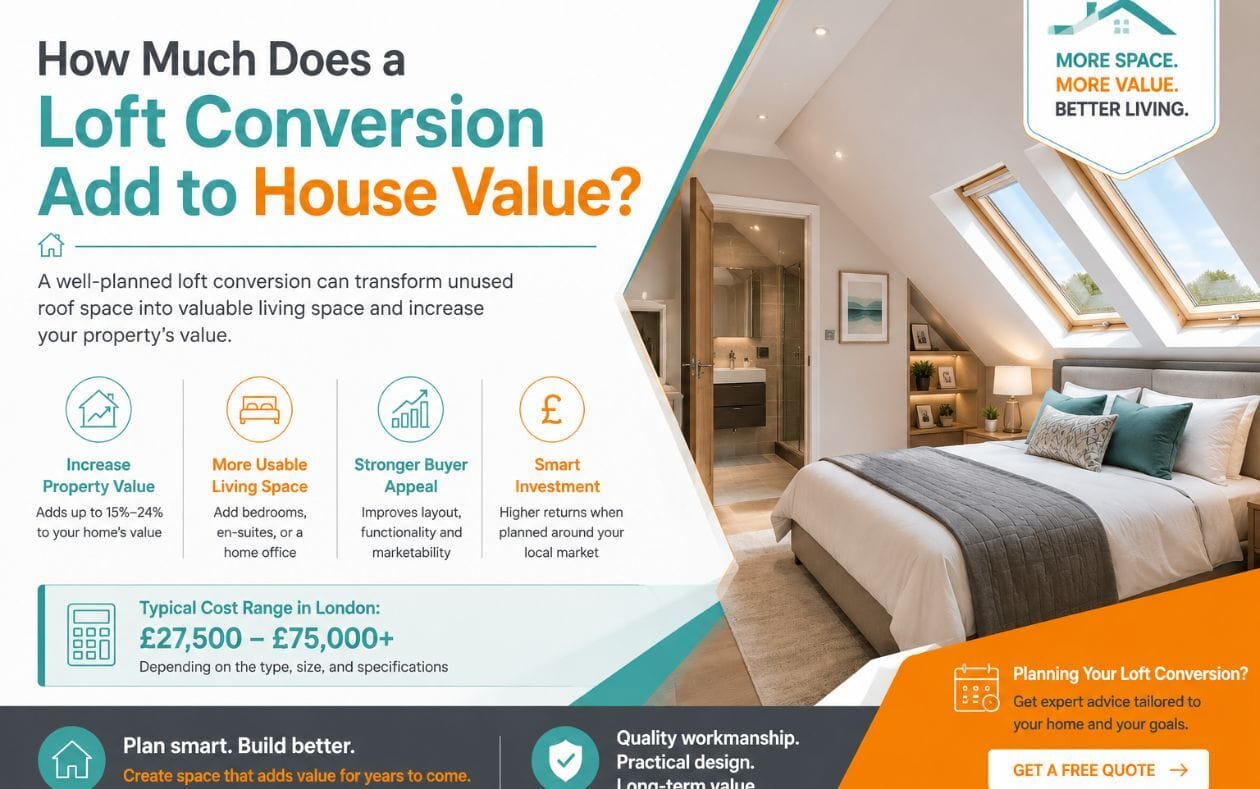
A loft conversion can increase a home’s value by roughly 15% to 24% when it creates practical, high-quality living space. For illustration, a 15% increase on a £400,000 home would equal £60,000. However, homeowners should not assume a fixed percentage because the actual uplift depends on the property and local market.
The return looks more attractive when the build cost remains comfortably below the value gained. Loft conversion prices often fall somewhere between £30,000 and £75,000+, but the final cost can rise with structural work, complex roof designs, higher specifications, or additions such as an en-suite.
The biggest gains usually come from conversions that improve the way the home works. An extra bedroom, useful floor space, good natural light, and a practical layout can all make the property more appealing to buyers.
Homeowners should also consider the local price ceiling. Spending heavily on a conversion does not always produce the same increase in resale value, especially if similar homes in the area already sell near their maximum market level.
What Factors Affect How Much Value a Loft Conversion Adds?
The factors that affect how much value a loft conversion adds include the property’s location, the usable space created, the number of bedrooms added, the layout, and the quality of the work. Local house prices and the area’s property price ceiling also influence the final increase in value.
1. Property Location and Local House Prices
A loft conversion can add more financial value in areas where property prices are higher and additional living space is in demand. Local sale prices also influence how much buyers are willing to pay for a larger home.
2. Number of Bedrooms Added
Adding a genuine extra bedroom can move a property into a higher-value category. The increase is usually stronger when the new room has suitable access, headroom, and proportions for everyday use.
3. Additional Usable Floor Space
Usable space matters more than total floor area. A well-proportioned room with good headroom is more valuable than a larger loft with restricted areas that cannot be used comfortably.
4. Adding an En-Suite Bathroom
An en-suite can strengthen the value of a loft bedroom by making the space more practical and private. It works best when the bathroom does not reduce the bedroom to an impractical size.
5. Quality and Layout of the Conversion
Buyers are more likely to value a conversion that feels integrated with the rest of the home. Good workmanship, a practical staircase, natural light, and a balanced layout can all support a stronger valuation.
6. Local Property Price Ceiling
A loft conversion may deliver a weaker return if the finished home exceeds the typical selling price for similar properties in the area. Checking comparable local sales can help homeowners avoid spending more than the market is likely to support.

How Much Does a Loft Conversion Cost?
The cost of a loft conversion in London typically ranges from £27,500 to £75,000+, depending on the conversion type, structural work, size, and finish. The cost of a loft conversion in London can be higher because labour, materials, and project complexity often increase overall pricing.
Rooflight conversions usually sit at the lower end of the range. Dormer, hip-to-gable, and mansard conversions generally cost more because they involve greater structural changes.
The final price can also rise if the project needs structural strengthening, new stairs, plumbing, electrical work, an en-suite, or higher-spec finishes.
Homeowners should compare the project cost with the amount of usable space and the potential property value it may create. A detailed quotation based on the property and proposed layout will give a more accurate figure than a general estimate.
What Are the Benefits of a Loft Conversion?
A loft conversion can give homeowners more usable space without changing the property’s footprint. It can also provide an alternative to moving when the existing home no longer meets their needs.
- Creates Useful Additional Living Space: A loft conversion can create a practical bedroom, home office, guest room, or private living area. The new space can help the home adapt to changing family needs without taking space from existing rooms.
- Can Reduce the Need to Move: For homeowners who need more room, converting the loft can be more practical than selling and buying a larger property. It allows them to stay in the same home and area while gaining additional space.
- Adds Space Without Reducing the Garden: Unlike many ground-floor extensions, a loft conversion uses space within the existing roof area. This allows homeowners to increase internal living space without reducing the size of the garden.
How to Maximise Value Through a Loft Conversion?
To maximise the value of a loft conversion, focus on creating space that improves how the home works rather than simply adding more floor area. The design should suit the property, meet practical needs, and appeal to future buyers.
1. Create Practical, Usable Living Space
The new room should have a clear purpose and enough usable space for everyday living. A well-proportioned bedroom, office, or guest room will usually add more value than an awkward space with limited headroom or difficult access.
2. Consider an Additional Bedroom and En-Suite
An extra bedroom can improve the property’s appeal, especially in family homes. Adding an en-suite can strengthen this further when there is enough space to include it without making the bedroom feel cramped.
3. Make Good Use of Natural Light and Headroom
Natural light can make a loft feel larger and more comfortable. Rooflights, dormer windows, and well-positioned glazing can improve the space, but good headroom is just as important. Buyers are more likely to value a room that feels open and easy to use.
4. Maintain a Practical Layout
The staircase, doors, storage, and room proportions should work together without compromising the rest of the house. A poorly positioned staircase can take away useful space from the floor below and reduce the overall benefit of the conversion.
5. Match the Finish to the Existing Home
The loft should feel like part of the original property rather than a separate addition. Consistent flooring, joinery, lighting, and decoration can help create a more cohesive result and improve buyer perception.
6. Avoid Overcapitalising
Spending more does not always mean adding more value. Compare the planned investment with recent sale prices for similar homes in the area. This can help you avoid pushing the finished property beyond the local price ceiling and protect the potential return on your loft conversion.
From a construction perspective, we consider factors such as available headroom, roof structure, staircase position, natural light, and usable floor area before finalising the layout. We have also completed a loft conversion in Chigwell, giving us practical experience of how these details can affect both the usability of the finished space and its long-term value.
Loft Conversion vs an Extension: Which Adds Most Value?
A loft conversion and a house extension can both add value, but the better option depends on the property, the type of space created, and local buyer demand.
A loft conversion can offer a strong return when it creates an extra bedroom, en-suite, or flexible living space without reducing the garden. This can be especially useful in homes where adding another bedroom makes the property more attractive to families or future buyers.
A house extension may add more value when the main limitation is on the ground floor. Creating a larger kitchen, dining area, or family room can improve how the home functions and make the property more appealing, particularly where existing living space feels restricted.
From a return-on-investment perspective, neither option is automatically better. A loft conversion may involve a lower overall budget in some properties, but costs can rise where major structural work, roof alterations, or complex access are required. An extension can also deliver a strong return when it solves a major layout problem and creates space buyers are willing to pay more for.
The best choice depends on the build cost, the type of space your home lacks, local property values, and what buyers in the area are most likely to value. Homeowners considering additional ground-floor space can also explore our house extension service to compare which option is more suitable for their property.
Conclusion
A loft conversion can be a valuable investment when it creates practical space that suits the property and meets local buyer demand. The strongest returns usually come from well-planned conversions that add useful living space, improve the layout, and stay within the local property price ceiling.
Homeowners should also compare the expected build cost with the potential increase in property value before starting the project. A larger or more expensive conversion does not always deliver a better return, so the design should focus on usability, quality, and what buyers in the area are likely to value.
At YDV Construction, we provide professional loft conversion services designed around your property, available space, and project goals. If you are considering converting your loft, get a quote from our team to understand the options available for your home.
Ready to discuss your project? Contact us to speak with YDV Construction about your loft conversion.
Frequently Asked Questions
A loft conversion does not increase your council tax band. In England, improvements are generally reflected in the council tax band only after the property is sold or in certain reassessment situations, so homeowners should check the current rules with the Valuation Office Agency before relying on this for budgeting.
Yes, a well-planned loft conversion can add value by creating useful living space, increasing the bedroom count, and improving buyer appeal. The actual uplift depends on the property, local market, layout, and quality of the work.
Both loft conversion and extension provide the same value as it depends on the property and what type of space buyers value most. A loft conversion can offer a strong return when it adds a bedroom or en-suite, whereas an extension may create a larger uplift when it significantly improves the kitchen, dining, or main living areas.
A mansard or L-sized loft conversion adds the most value when they provide a proper bedroom, good headroom, and an efficient layout.
Many loft conversions in North London do not require planning permission because they can fall under permitted development rights, although permission may still be needed for larger roof alterations, listed buildings, conservation areas, or properties with restricted development rights.
Most UK loft conversions cost around £27,500 to £75,000+, although the final price depends on the conversion type, structural requirements, size, specification, and location. London projects can cost more, particularly when they involve major roof alterations, an en-suite, or higher-spec finishes.