A building project can quickly become confusing once different trades start working in sequence. Homeowners often hear terms like first fix and second fix during renovations, extensions, and conversions, but the timing of each stage is not always clear.
That lack of clarity can lead to late decisions, changes after work has already moved on, and unnecessary disruption. It can also make it harder to understand why electrical, plumbing, carpentry, plastering, and finishing work need to happen in a specific order.
Good planning makes the whole process easier to manage. At YDV Construction, we provide professional construction services in East London and plan each stage around the structure, services, layout, and finishing requirements so the work progresses in the right order.
Key Takeaways
- First fix covers the hidden structural work and building services, while second fix completes the visible fittings, final connections, and finishing work across the property.
- First fix can include electrical wiring, plumbing pipework, structural carpentry, heating routes, ventilation, and other concealed services before plastering.
- Second fix brings those earlier preparations into use through sockets, switches, taps, sanitaryware, doors, skirting boards, lighting, and other visible finishes.
- Good coordination between builders, electricians, plumbers, carpenters, and other trades helps reduce rework, delays, and fitting problems later in the project.
What is a First Fix?
The first fix is the initial stage of a building project where the main structural preparation and hidden services are installed before plastering and final finishes. It covers work that will later sit behind walls, ceilings, floors or fitted surfaces.
The exact scope depends on the property and the type of project. An extension, loft conversion, or full renovation may involve more first fix work than a smaller refurbishment. Getting this stage right matters because mistakes become harder to correct once plasterboard, plaster, flooring, and other finishes cover the work.
What Does First Fix Include?
First fix covers the structural and concealed work that needs to be completed before plastering and final finishes begin. Depending on the project, this can include:
- Structural carpentry: Forming stud partitions, floor structures, door openings, stair elements, and other timber work that shapes the internal layout.
- Electrical preparation: Running cables, setting back boxes, and positioning wiring routes for sockets, switches, lighting, and other electrical points.
- Plumbing and heating: Installing concealed pipework for water, waste, heating, and planned bathroom or kitchen connections.
- Ventilation routes: Preparing ductwork and service runs for extract systems or mechanical ventilation where the design requires them.
- Service coordination: Checking that structural work and hidden services sit in the correct positions before walls and ceilings are closed.
The exact first fix scope depends on the property and project type. A loft conversion or house extension may involve more structural and service preparation than a smaller renovation.
What Are the Stages of First Fix?
First fix usually follows a planned sequence, so structural work and hidden services can be completed without creating clashes later.
- Confirm the layout and service positions: The team checks room layouts, openings, plumbing points, electrical locations, and other key details before installation starts.
- Complete structural preparation: Builders form the internal framework and prepare the areas that will carry hidden services.
- Install concealed services: Electricians and plumbers run the required cables, pipework, and service routes through the prepared structure.
- Coordinate between trades: The team checks that electrical, plumbing, heating, and ventilation routes do not interfere with each other.
- Inspect before closing surfaces: Final positions and connections are reviewed before plasterboard, flooring build-ups, or other finishes cover the work.
- Prepare for plastering and second fix: Once the hidden work is complete and checked, the project can move into boarding, plastering, and later second-fix installation.
The exact order can vary, but careful coordination at first fix usually makes the later stages quicker and reduces the risk of rework.
Why Is the First Fix Stage Important?
First fix matters because it sets the foundation for everything that follows. Hidden services, structural elements, and key positions need to be accurate before walls and ceilings are closed.
A well-planned first fix helps:
- Reduce clashes between electrical, plumbing, and carpentry work
- Keep sockets, pipework, and fittings in the correct positions
- Avoid unnecessary cutting into finished surfaces later
- Support smoother plastering and second-fix work
- Reduce delays caused by late changes
From a project-management perspective, this is one of the stages where careful checking matters most because correcting hidden work becomes more disruptive once boarding and plastering begin.
What is Second Fix?
Second fix is the later stage of construction where trades return after plastering to install visible fittings, fixtures and finishing elements.
At this point, the hidden cables, pipes, and structural preparation from the first fix are already in place. Electricians fit sockets, switches, and lighting accessories, while plumbers connect taps, sanitaryware, and radiators. Carpenters also complete visible joinery such as internal doors, skirting boards, and architraves.
The exact scope depends on the project, but second fix mainly focuses on finishing, connecting, and testing the elements that homeowners will see and use every day.
What Does Second Fix Include?
Second fix covers the visible fittings, final connections, and finishing work that follow plastering and other surface preparation.
- Electrical fittings: Electricians install socket fronts, switches, light fittings, controls, and other visible electrical accessories.
- Plumbing fixtures: Plumbers connect taps, toilets, basins, showers, radiators, and other sanitary or heating fittings.
- Carpentry and joinery: Carpenters fit internal doors, skirting boards, architraves, ironmongery, and other visible timber finishes.
- Kitchen and bathroom fittings: Trades complete final connections and fitting work for units, appliances, sanitaryware, and associated fixtures where required.
- Testing and adjustment: Electrical, plumbing, heating, and other systems are checked, tested, and adjusted before final completion.
- Finishing details: The team completes smaller visible elements and prepares the property for decoration, snagging, and handover.
Second fix brings the earlier hidden work into use and gives each room its finished, functional form.
What are the Stages of Second Fix?
Second fix usually follows a planned sequence so each trade can complete its work without damaging finished surfaces or blocking another installation.
- Check the first-fix work: The team confirms that cables, pipework, openings, and service positions match the final layout before visible fittings go in.
- Complete electrical and plumbing connections: Electricians and plumbers return to connect the fittings prepared during first fix.
- Install internal carpentry: Doors, architraves, skirting boards, handles, and other finishing joinery are fitted once the surrounding surfaces are ready.
- Complete kitchens and bathrooms: Units, worktops, sanitaryware, and appliances are fitted in line with the agreed layout and service positions.
- Test the building services: Electrical, plumbing, heating, and ventilation systems are checked before final completion.
- Carry out snagging: The team identifies small defects, alignment issues, or unfinished details and corrects them before handover.
The exact order can vary between projects, but careful coordination helps prevent finished work from being damaged or removed later.
Why Is the Second Fix Stage Important?
Second fix matters because it brings the visible parts of the project together and turns the earlier preparation into a usable finished space. The quality of this stage affects how the property looks, functions, and feels day to day.
A careful second fix helps:
- Ensure sockets, switches, taps, doors, and other fittings align correctly
- Connect fixtures properly to the services installed during first fix
- Reduce visible defects and poor finishing
- Identify small issues before final handover
- Improve the overall quality of the completed work
What Is the Difference Between First Fix and Second Fix?
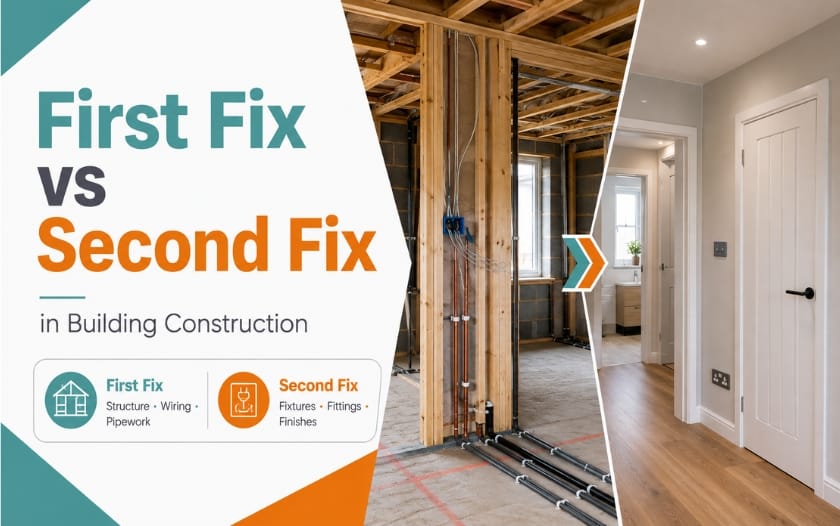
The main difference between first fix and second fix is that first fix covers the hidden structural work and building services, while second fix covers the visible fittings, final connections, and finishing work. First fix includes elements such as wiring, pipework, framing, and service routes before plastering, whereas second fix includes sockets, switches, taps, sanitaryware, doors, skirting boards, and other visible components.
| First fix | Second fix |
| Happens before plastering and final finishes | Happens after plastering and surface preparation |
| Covers concealed cables, pipework, framing, and service routes | Covers sockets, switches, taps, sanitaryware, doors, and visible fittings |
| Prepares the property for later stages | Completes the elements homeowners see and use |
| Requires careful coordination between trades | Relies on accurate first-fix positions and preparation |
Both stages depend on each other. If the first fix is poorly planned, the second fix can become slower, more disruptive, and harder to complete neatly.
How Do First Fix and Second Fix Apply to Different Building Trades?
First fix and second fix involve several trades, but each one completes a different type of work at each stage. Electrical, plumbing, carpentry, heating, and ventilation all need to follow the right sequence so hidden services are installed before visible fittings and finishes go in.
Good coordination matters because one trade can easily affect another. A poorly positioned cable, pipe, or timber frame can create problems later, so the layout and service routes should be checked before walls and ceilings are closed.
What is First Fix and Second Fix Electrical Work?
First fix electrical work covers the hidden wiring and preparation completed before plastering, while second fix electrical work covers the visible fittings, final connections, and testing.
During first fix, electricians run cables, position back boxes, and prepare points for sockets, switches, lighting, and fixed appliances. During second fix, they install the visible accessories, connect them to the wiring, and carry out the required checks.
For projects that involve new circuits or changes to existing wiring, YDV Construction can coordinate the electrical stage through its electrical services as part of the wider build programme.
What is First Fix and Second Fix Plumbing?
First fix plumbing covers the concealed pipework and service routes, while second-fix plumbing covers the fixtures, final connections, and testing.
During first fix, plumbers install water pipes, heating runs, waste connections, and drainage routes for kitchens, bathrooms, and radiators. During second fix, they connect taps, basins, toilets, showers, baths, radiators, and other visible fittings.
Accurate positioning at first fix helps the final fixtures line up correctly with the planned layout. YDV Construction can coordinate this work alongside its plumbing services where the project requires new or altered pipework.
What is First Fix and Second Fix Carpentry?
First fix carpentry covers the timber work that forms or supports the internal structure, while second fix carpentry focuses on the visible joinery and finishing details.
First fix tasks can include stud partitions, door linings, floor structures, stair components, and other timber elements that need to be in place before plastering. Second fix carpentry usually includes internal doors, skirting boards, architraves, handles, and other visible finishes.
Carpentry often connects closely with other trades, so measurements and service positions need to be checked before installation. YDV Construction can coordinate this work through its carpentry services, helping the timber elements fit correctly around the wider electrical, plumbing, and finishing work.
How Should You Plan for First Fix and Second Fix?
Planning starts with confirming the layout, service positions, and key fittings before first fix begins. Clear decisions at this stage help prevent rework and keep each trade moving in the right order. Before work starts, confirm:
- Room layout: Finalise walls, doors, kitchen units, bathroom fittings, and built-in features.
- Electrical points: Set positions for sockets, switches, lighting, appliances, and controls.
- Plumbing points: Confirm sinks, toilets, showers, baths, radiators, and appliance connections.
- Heating and ventilation: Plan radiator locations, extract fans, and ventilation routes where needed.
- Carpentry details: Check partitions, door linings, stairs, and other timber elements.
- Materials: Order key fittings early enough to avoid delays during second fix.
During a site assessment, the layout only tells us part of the story. We also need to understand where existing services run, how new pipework and wiring will connect, and whether the proposed positions work with the structure before first fix begins.
YDV Construction also checks access, existing services, structural conditions, and trade sequencing before work begins. This helps reduce clashes and keeps the project organised through our construction project management services.
You can also explore our recent construction projects to see how different stages of residential building work come together across completed projects.
How Long Do First Fix and Second Fix Take?
The time needed for first fix and second fix depends on the size of the project, the number of trades involved, and the condition of the property. Smaller renovations may move through these stages quickly, while larger extensions or full refurbishments usually take longer.
First fix often takes more time when the work includes structural changes, new electrical wiring, plumbing alterations, or complex service routes. Second fix can also take longer if the project includes detailed carpentry, several rooms, bespoke fittings, or multiple final connections.
Other factors such as access, material availability, design changes, plaster drying time, testing, and unexpected site issues can affect the programme. At YDV Construction, we plan both stages as part of the wider build sequence so trades can move from first fix to plastering and second fix without unnecessary delays.
Can Changes Be Made After First Fix?
Yes, changes can still be made after first fix, but they usually become more difficult once walls, ceilings, and floors start closing over the hidden services. Moving sockets, pipework, lighting points, or other services at this stage can create extra labour and affect finished surfaces.
That is why layout decisions should be confirmed as early as possible. Electrical points, plumbing positions, kitchen layouts, bathroom fittings, and built-in features all need careful planning before the first fix is signed off.
If a change becomes necessary, the best approach is to assess how it affects the structure, existing services, and later finishing work before proceeding. Early coordination helps avoid unnecessary rework and keeps the project moving in the right sequence.
Conclusion
Understanding first fix and second fix helps homeowners follow the construction sequence, make key decisions earlier, and avoid changes once hidden services and finished surfaces are already in place. Careful planning between trades also makes electrical, plumbing, carpentry, plastering, and finishing work easier to coordinate.
At YDV Construction, we manage residential building projects with attention to the existing structure, service positions, access, layout, and finishing requirements. We plan each stage around the property and the homeowner’s priorities rather than treating first fix and second fix as separate tasks.
If you’re planning an extension, renovation, conversion, or other building work, contact us to discuss your project or get a free quote from YDV Construction.
Frequently Asked Questions
First fix electrical work can take from a few days to longer on larger projects. The timeframe depends on the property size, number of circuits, access, layout complexity, and whether the work forms part of a renovation, extension, or full refurbishment.
No, second fix normally happens after plastering and surface preparation because sockets, switches, sanitaryware, doors, and other visible fittings need finished surfaces around them.
Socket back boxes and wiring are usually installed during the first fix. The visible socket faceplates are then fitted and connected during the second fix.
It depends on the door component. Door linings or frames may form part of first fix, while internal doors, handles, architraves, and other visible finishes are usually completed during second fix.
Yes, first fix includes the concealed plumbing work, such as hot and cold water pipework, heating runs, waste pipes, and drainage connections that need to be installed before walls, floors, and ceilings are closed.