The UK construction industry is evolving rapidly, with new technologies, sustainable building methods and stronger project controls changing how homes are designed, renovated and built. In 2026, some of the most important construction industry trends in the UK include artificial intelligence, Building Information Modelling (BIM), modern methods of construction, low-carbon materials, digital project management and a greater focus on building safety.
For homeowners, these developments can improve project coordination, energy efficiency, communication and overall build quality when they are used appropriately. However, the right approach will always depend on the property, project scope, site conditions and budget.
Understanding these trends can help homeowners make better decisions when planning a renovation, extension or new building project. The most useful innovations are those that improve performance, reduce avoidable problems and support a better-managed construction process from planning through to completion.
What Are the Main UK Construction Industry Trends in 2026?
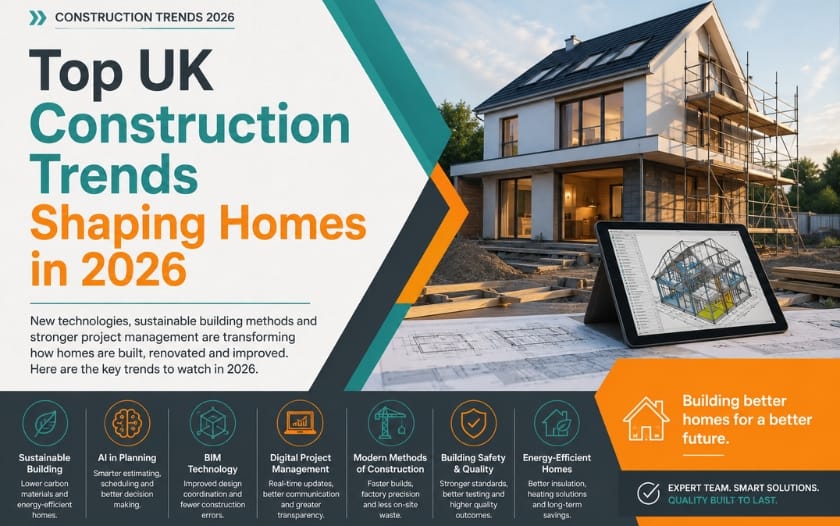
The main UK construction industry trends in 2026 focus on sustainable construction, AI-assisted planning, Building Information Modelling (BIM), digital project management, modern construction methods, building safety, and energy-efficient home improvements.
1. Sustainable and Low-Carbon Construction
Sustainability is becoming a bigger consideration across residential construction, with more attention given to reducing energy use, material waste and the environmental impact of building work. This includes better insulation, more efficient glazing, responsible material selection and design choices that improve long-term building performance.
2. AI in Construction Planning
Artificial intelligence is beginning to support tasks such as estimating, scheduling, document organisation and project forecasting. Used correctly, it can help construction teams review information faster, identify potential issues earlier and improve planning, but experienced professionals still need to assess the final decisions.
3. Building Information Modelling (BIM)
BIM allows drawings, specifications and project information to be managed in a more coordinated way. Instead of different teams working from separate or outdated information, BIM can help designers, engineers and contractors work from a clearer shared project record, reducing the risk of clashes and avoidable changes.
4. Digital Project Management
Digital project management tools are improving how construction teams record progress, approve changes and communicate important updates. Effective construction project management can also make it easier to organise site photographs, schedules, specifications and completion information, giving homeowners a clearer picture of how work is progressing.
5. Modern Methods of Construction
Modern methods of construction include prefabrication, factory-made components and modular building systems. Producing parts of a building away from the site can improve consistency and reduce on-site installation time, although suitability depends on factors such as access, design, transport and project scale.
6. Building Safety and Quality Control
There is a stronger focus on demonstrating that construction work has been completed correctly, not simply finishing the project as quickly as possible. Clear responsibilities, suitable materials, inspections, testing and accurate records all contribute to better quality control and help reduce the risk of defects.
7. Energy-Efficient Home Improvements
Energy efficiency is increasingly being considered alongside general renovation and construction work. Measures such as improved insulation, ventilation, glazing and heating controls can reduce heat loss, improve indoor comfort and help homeowners get better long-term performance from their property.
What Challenges Is the UK Construction Industry Facing in 2026?
The UK construction industry is facing several pressures in 2026, including higher costs, labour shortages, supply-chain uncertainty and growing expectations around safety, sustainability and project performance. These challenges can affect project budgets, timescales and the availability of skilled contractors.
1. Rising Material and Labour Costs
Construction costs remain a major concern for homeowners and contractors. Changes in material prices, transport costs and labour rates can affect quotations, so realistic budgeting and clear cost allowances are increasingly important at the planning stage.
2. Skills Shortages and Contractor Availability
The industry continues to face shortages in some skilled trades and technical roles. This can make experienced contractors harder to book and may extend lead times, especially for larger renovations, extensions and specialist work.
3. Supply-Chain and Material Delays
Some projects can be affected by long lead times for specific products, fixtures or specialist materials. Early specification and ordering can help reduce the risk of delays once construction is underway.
4. Stricter Safety and Quality Expectations
There is greater emphasis on competent workmanship, suitable materials, inspections and clear project records. Contractors need to show that important stages of work have been completed correctly rather than relying only on the finished appearance.
5. Balancing Sustainability With Budget
Homeowners may want better insulation, lower-carbon materials and improved energy performance, but these choices can increase upfront costs. The challenge is selecting measures that offer practical long-term value without adding unnecessary expense.
6. Managing Regulations and Compliance
Planning requirements, Building Regulations and other compliance obligations can influence how a project is designed and delivered. Understanding whether you need planning permission early can help avoid redesigns, approval delays or unexpected changes during construction.
How Are UK Construction Trends Affecting Homeowners in 2026?
UK construction trends give homeowners more options to improve efficiency, project control and long-term property performance. They also make early planning more important because homeowners and contractors must assess new materials, digital tools and modern construction methods against the property, budget and scope of work.
Better Project Planning and Coordination
Digital drawings, organised project records and improved scheduling help teams identify potential issues before construction starts. They also reduce confusion between trades and give homeowners a clearer view of how the work will progress.
1. More Focus on Energy Efficiency
Homeowners increasingly prioritise insulation, glazing, ventilation and heating performance during renovation and extension projects. Planning these improvements together can improve comfort, reduce heat loss and support better overall energy performance.
2. Greater Transparency During Construction
Digital updates, progress photographs and clear variation records give homeowners a better understanding of the project. These tools also help them track completed work, review changes and stay informed throughout each stage of construction.
3. More Choices in Construction Methods
Modern materials and offsite construction methods give homeowners more options than traditional building approaches alone. For larger property improvements, such as those requiring professional house conversion services, contractors can assess access, design, structural requirements and budget to determine which construction method best suits the project.
4. Greater Emphasis on Long-Term Value
Homeowners now look beyond the initial construction cost and consider durability, maintenance, energy performance and future use. Following practical house conversion tips, such as planning the layout carefully, assessing structural requirements early and setting a realistic budget, can also help homeowners make better long-term decisions. A well-planned project should improve the property in a way that continues to deliver value long after the construction work ends.
Conclusion
The UK construction industry in 2026 is becoming more digital, sustainable and performance-focused, with new technologies and modern building methods changing how residential projects are planned and delivered. For homeowners, these developments can improve project coordination, energy efficiency, transparency and long-term property performance.
The best results still depend on choosing construction methods that suit the property, budget and scope of work. As a construction company in Ilford, YDV Construction supports homeowners with practical planning, coordinated project delivery and quality workmanship across renovations, extensions and other residential building projects.
By combining modern construction approaches with experienced project management and careful site assessment, YDV Construction can help homeowners choose solutions that add real value to their property and support a smoother build from planning through to completion.
Frequently Asked Questions
The main trends include sustainable construction, AI-assisted planning, Building Information Modelling (BIM), digital project management, modern methods of construction and stronger building safety standards.
Technology is helping construction teams plan projects more accurately, manage information more efficiently and improve communication. Tools such as BIM, AI and digital project platforms can also help identify issues earlier.
Modern methods of construction include prefabrication, modular systems and factory-made building components. These approaches can reduce on-site work and improve consistency when they suit the property and project.
Construction trends can give homeowners better project visibility, more energy-efficient options and greater control over how work is planned and managed. They can also influence project costs, timelines and material choices.
Sustainable construction can involve higher upfront costs in some cases, but the overall cost depends on the materials, design and level of improvement. Energy-efficient upgrades can also improve long-term property performance and reduce energy demand.